- Calcium and magnesium must be reduced to ppb level before the electrolysers — follow your membrane supplier's specification.
- Brine treatment has two stages: primary (precipitation and filtration) and secondary (ion exchange).
- Dechlorination and sulfate control keep the closed brine loop stable.
A membrane electrolyser is only as good as the brine that feeds it. In a chlor-alkali plant, brine purification is the first line of defence for the membranes — and one of the most frequent causes of performance loss when it is neglected. This guide explains how a reliable brine treatment system is built and operated.
Why brine quality decides membrane performance
The ion-exchange membrane separates the anode and cathode compartments. When impurities such as calcium and magnesium reach it, they precipitate as hydroxides inside or on the membrane. The consequences are well known:
- higher cell voltage, so higher electricity consumption per tonne;
- lower current efficiency;
- shorter membrane life and earlier, costly replacements.
This is why membrane plants need a much purer brine than older diaphragm plants — one of the key points in any membrane vs diaphragm conversion.
The brine loop of a membrane plant
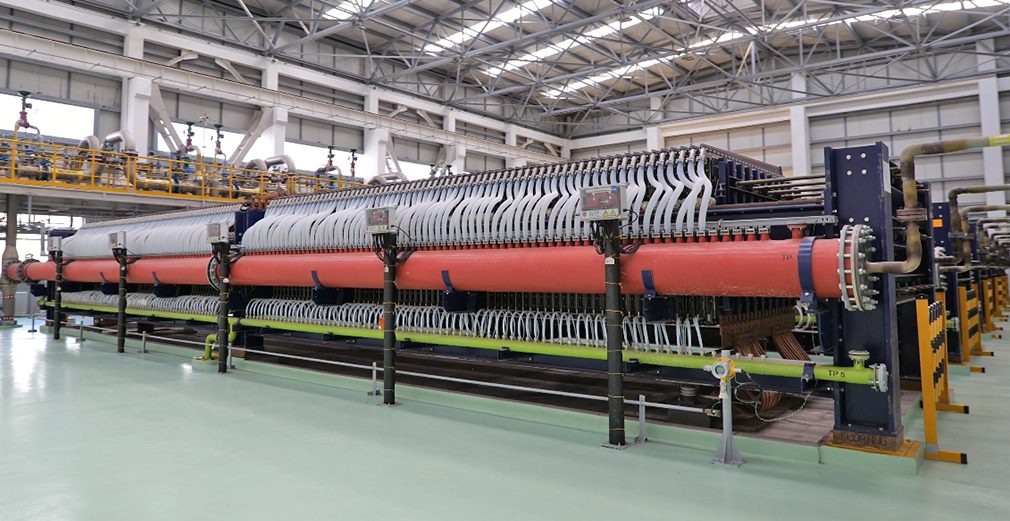
Brine circulates in a closed loop: salt is dissolved, the brine is purified, partly electrolysed, then dechlorinated and sent back to be resaturated.
The key impurities to control
| Impurity | Effect on the membrane or the process | Main treatment |
|---|---|---|
| Calcium, magnesium | Precipitate in the membrane, raise voltage | Primary precipitation, then ion exchange |
| Strontium, barium | Deposits in the membrane | Ion exchange |
| Sulfate | Lowers efficiency above the supplier limit | Purge or nanofiltration |
| Iodine, silica, aluminium | Deposits, often combined with other impurities | Salt selection, specific treatment |
| Iron and heavy metals | Deposits on electrodes and membrane | Precipitation and filtration |
| Free chlorine (depleted brine) | Damages ion-exchange resin | Dechlorination |
Exact limits depend on the membrane and the electrolyser. Always design to the supplier's brine specification — for INEOS BICHLOR™ electrolysers, ACT works directly from the INEOS requirements.
Primary brine purification
The primary treatment removes most of the hardness and suspended solids:
- Precipitation: sodium carbonate turns calcium into calcium carbonate, and caustic soda turns magnesium into magnesium hydroxide.
- Settling: a clarifier separates the precipitated sludge.
- Filtration: sand or candle filters remove the remaining fine particles that would block the resin.
At this stage, hardness is down to a few ppm — far from enough for a membrane.
Secondary purification by ion exchange
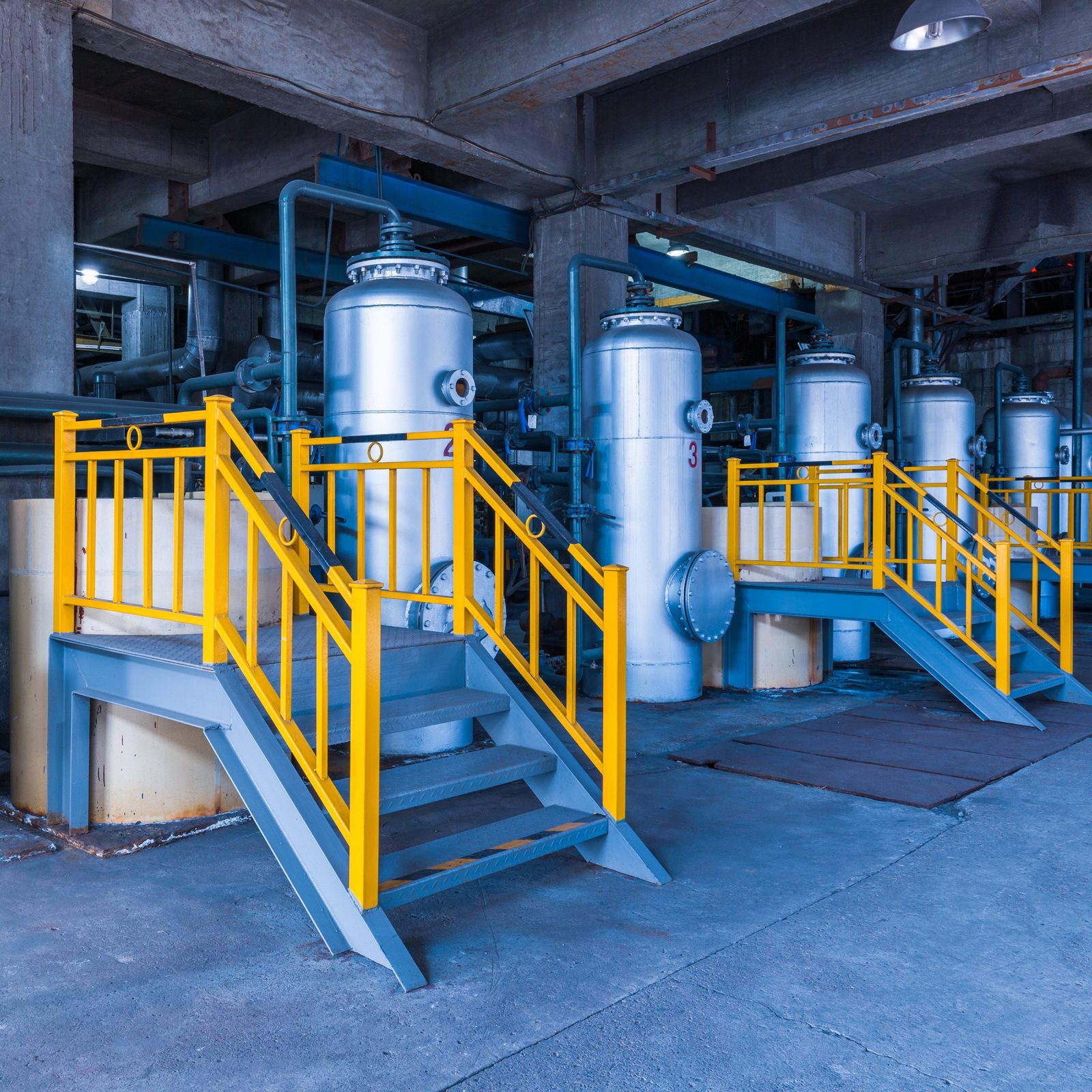
The secondary purification uses chelating ion-exchange resins that selectively capture divalent ions. Good practice includes:
- columns in series (lead-lag), so one can be regenerated while the other protects the plant;
- regeneration with hydrochloric acid and caustic soda, following a strict sequence;
- brine that is free of chlorine and suspended solids before it reaches the resin;
- temperature and pH kept within the resin supplier's range.
The outlet brine reaches the ppb level for calcium and magnesium required by the membranes.
Dechlorination and sulfate control
The depleted brine leaving the electrolysers still contains dissolved chlorine. Brine dechlorination usually combines acidification, vacuum or air stripping, and a final chemical step with sodium sulfite or bisulfite. The recovered chlorine goes back to the process.
Sulfate accumulates in a closed loop. It is controlled by a brine purge or, increasingly, by nanofiltration, which reduces salt losses and liquid discharge — a step towards more sustainable operations and our brine and water treatment solutions.
Monitoring and operator training
A good design is not enough: brine quality must be monitored continuously with online analysers and regular laboratory checks. Operators must know how to react to a resin breakthrough or a filter failure before the membranes are hit. ACT supports plants with technical assistance and dedicated training programmes.
Frequently asked questions
What calcium and magnesium level do membrane electrolysers require?
Membrane electrolysers require calcium and magnesium at ppb level. The exact limit is set by the membrane and electrolyser supplier, so the brine system must be designed to that specification.
What is the difference between primary and secondary brine purification?
Primary purification removes most hardness and solids by precipitation, settling and filtration, down to ppm level. Secondary purification uses chelating ion-exchange resins to reach the ppb level needed by membranes.
Why must brine be dechlorinated?
Depleted brine contains dissolved chlorine that would damage the ion-exchange resin and equipment in the brine loop. Dechlorination also recovers chlorine back to the process.